
Between Moons: A Time for Rest 🌙
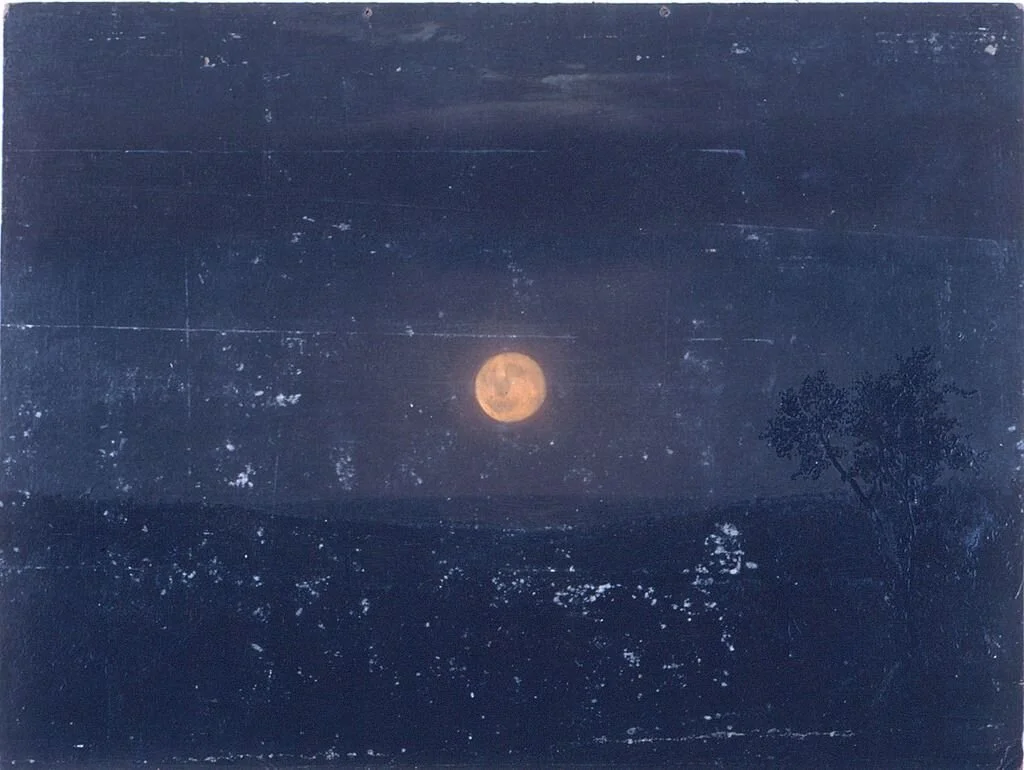
Frederic Edwin Church, Moonlight, Church’s Farm in Hudson, NY c.1865.
the ancestral homelands of the Mohicans
Hello Friends,
We are coming to the end of February in the North East. Soon the full Snow Moon (2/27) will shine her beauty on our crystalline landscape. This full moon name is associated with Native Americans and was adopted by the colonial settlers who added it to the farmers almanac. But, specifically the Algonquin people from the North East named this moon Wapicuummilcum, which meant the strength to thaw. The moons in America were named by indigenous people based on the qualities specific to their place. For example the February full moon in Arizona was named by the Hopi, Powamuya, which meant the moon of purification and renewal or the Atchiulartadsh, was the February moon name by the Kalapuya from Oregan, meaning out of food. The moon has always been honored and used as a technology of time--telling us something about what to expect and what to do in our place. Many of us have lost her meaning deep in the recesses of being busy or replaced with buzzing apps.
This has been a stark season. A winter of cold isolation as we’ve remained prudent in our social gatherings that warm our hearts and bodies. It takes a greater inner resilience to withstand the cold alone and to kindle the warmth we need to thaw--as our February moon suggests. We have been thinking about what is needed to stoke inner flames that have waned under frigid conditions and we are examining how nature provides examples of regeneration for us to learn from, to remember our own nature.
One quality of many animals living in cold weathered environments is hibernation. Hibernation is not simply sleep, but rather a survival mechanism that slows the animals processing to conserve their energy. It has been demonstrated that it is also a method to create new blooming neurons when the animal returns to their awakened state. Hibernation could be considered a practice of resurrection that creates a renewed being.
We have decided at Place Corps to lean into the lunar calendar and use this period between the Wapicuummilcum and Namossack Kesos moons to take a recess, to rest, to slow down and rekindle our creative fires and conserve our energy. Namossack Kesos is again the Algonquin name for the full moon in March and means, ice in river is gone.
What will our recess look like? By definition recess means to take a break from doing something, like work or school, often time filled with play. Recess also means the action of receding or a hidden, secret, or secluded place (a perfect place to hibernate). We intend to inhabit both definitions. We intend to use this time to retreat into our own recesses to recover from business aka busyness. To heal. To play. To be inspired--literally to be breathed into with Spirit.
We are entering this lunar recess as a practical skill for regeneration and renewal. We look forward to seeing you when the ice in the river is gone and we return with hearts open from thawing and full of inspiration. Wishing you all the strength to thaw.
Warmly,
Dawn Breeze
Director
“All that you touch you Change. All that you Change Changes you. The only lasting truth is Change. God Is Change.”
― Octavia Butler, Parable of the Sower